

By late afternoon, many people notice a familiar pattern. Shoes that felt fine in the morning feel tight, socks leave a deep mark around the ankle, and a dull ache settles in after a long shift. Resting with your feet up brings relief, and by morning things often feel better again. Because it builds so gradually, the pattern is easy to brush off as tiredness or getting older, even when it happens day after day.
This repeating pattern is worth paying attention to, especially when other changes join it. Legs may feel heavy instead of painful, ankles may swell toward evening, and lower leg skin can grow itchy or darker over time. Some people notice restless legs at night, cramping, or new visible veins. None of these signs alone explains what is going on, but they are a good reason to raise the topic at your next primary care visit.
When Tired Legs Might Point to a Vein Problem
Primary care is usually the right first stop when leg symptoms keep returning. A clinician who knows your history can sort out whether the pattern fits a vein problem or something else. If vein disease looks like a reasonable possibility, many patients look for the best vascular surgeon for a closer look at leg circulation. That referral does not mean you need a procedure. It does not replace the broader health picture your regular doctor already understands, and it simply focuses the next step on how blood is moving through the veins in your legs.
Chronic venous insufficiency is the term used when leg veins struggle to send blood up toward the heart. Healthy veins have one way valves that keep blood moving upward instead of slipping backward, helped by the calf muscles squeezing with every step. When valves weaken, blood pools in the lower legs, pressure builds, and fluid leaks into tissue. That pooling explains the heaviness, aching, and swelling that feel worst at the end of the day.
Who Is More Likely to Develop It?
Some people are more prone to vein problems than others. A family history of varicose veins raises the chances, as does aging, since valves wear down over time. Pregnancy adds pelvic pressure and changes blood volume, so symptoms often appear or worsen then. Long hours of standing or sitting at work play a role too, because still calf muscles move less blood. A previous leg injury or a past blood clot can damage valves too.
A Note on Home Remedies People Often Ask About
Many patients arrive with questions about home remedies they have read about online. Creams, massage, and essential oils come up again and again, especially when visible spider veins are the main concern. The appeal is understandable, and guides to the best essential oils for spider veins often name castor oil and helichrysum oil. But oils do not repair vein valves, and evidence that they help spider veins is limited. They can irritate skin, so use them diluted, stop if redness or itching appears, and treat them as comfort care, not an alternative to evaluation.
Symptoms That Should Not Wait
Most leg heaviness develops slowly, but a few changes deserve prompt attention rather than a wait and see approach. New swelling in one leg only, especially if it comes on quickly, should be evaluated the same day, because a blood clot in a deep vein is one possibility a clinician wants to rule out. Sudden leg pain, warmth, or redness in one calf is another reason to call promptly.
Chest pain, shortness of breath, or coughing up blood alongside leg symptoms is an emergency and needs urgent care right away. These warning signs do not mean a clot is definitely present. They mean guessing at home is not the safe option, and an in person evaluation matters.
It is also worth knowing that leg swelling does not always come from the veins at all. Heart conditions can make fluid build up in both legs, and kidney problems can change how the body handles fluid and protein. Thyroid problems contribute to puffiness and fatigue, and some blood pressure medicines can cause ankle swelling as a side effect.
This is one reason a full primary care workup matters before anyone assumes the veins are to blame. Reviewing your medicines, checking blood pressure, and ordering lab tests when needed can point the evaluation in the right direction and keep an unrelated problem from being missed.
What an Evaluation Usually Involves
A vein evaluation usually starts with conversation rather than equipment. Your clinician will ask when the heaviness began, what makes it better or worse, whether one leg is worse, and whether you have noticed skin changes or a family pattern. An exam follows, often with a look at the veins and skin while you are standing, since swelling and veins are easier to judge that way.
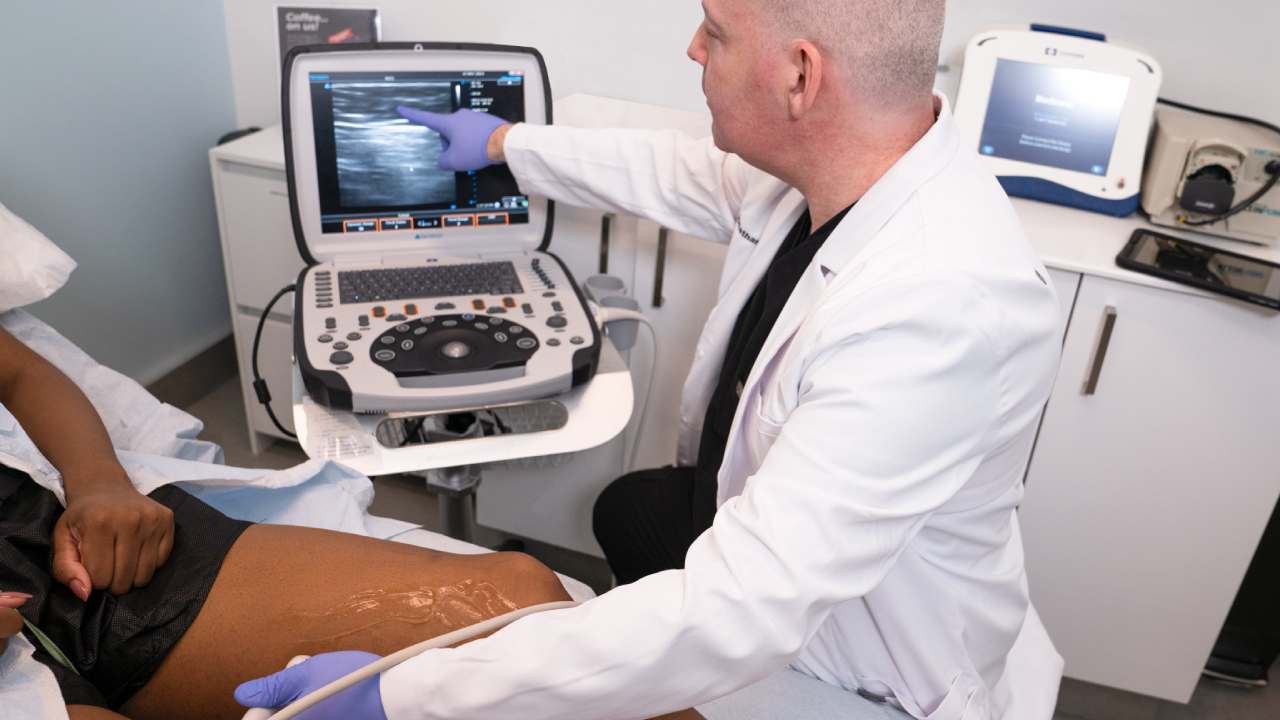
If vein disease still seems likely, the next step is often a duplex ultrasound. This test uses sound waves to show how blood is moving through the veins and whether the valves are letting blood slip backward. The results help judge how mild or advanced the problem is and what follow up makes sense.
Daily Habits That Can Help Your Legs Feel Better
Day to day habits will not fix a valve, but they can make heavy legs easier to live with. Walking is one of the simplest tools, because every step asks the calf muscles to pump blood upward. Short calf raise sets during a work break, ankle flexes at your desk, and chances to change position help if your job keeps you still.
Resting with your legs raised on a pillow in the evening can ease end of day fullness. Some clinicians suggest compression stockings, which squeeze the leg and support blood flow upward. Compression is not right for everyone, so start it when a clinician recommends it, in the strength they suggest, rather than guessing on your own.
Treatment Options if Vein Disease Is Confirmed
If testing confirms venous insufficiency, treatment does not automatically mean an operation or a hospital stay. For some, the first plan is monitoring, daily habits, and treating other conditions that is adding to the swelling. When a diseased vein needs to be closed, specialists use minimally invasive in office procedures that seal the vein from the inside, so blood reroutes through healthier veins nearby.
Other options can treat surface veins, depending on what the ultrasound shows and where symptoms come from. Each approach has benefits, limits, and recovery details, and none works the same way for everyone. A specialist will explain why an option fits your veins, or why waiting is wiser for now.
When a Referral to a Vein Specialist Makes Sense
Primary care and vein care work best as a team effort rather than separate worlds. A referral often makes sense when heaviness and swelling keep returning despite simple measures, when the skin on the lower leg starts to change color or texture, or when a sore on the leg is slow to heal.
Bleeding from a surface vein, repeated surface vein inflammation, or an ultrasound showing blood flowing the wrong way are reasons. Your clinician can help you prepare questions about cost, follow up visits, and what improvement realistically looks like. That coordination matters, because your health and medicines shape which vein treatment, if any, is sensible for you.
Frequently Asked Questions
Can essential oils cure spider veins or varicose veins?
No. An oil on the skin cannot repair a failed valve or close a diseased vein. Diluted oils may feel soothing during leg massage, but evidence that they improve spider veins is limited, and you should stop if redness or itching appears.
Is leg swelling always a vein problem?
No. Swelling can also come from the heart, kidneys, thyroid, or liver, and some blood pressure medicines cause ankle swelling too. Vein disease is a frequent cause, but it should be confirmed, not assumed.
When should leg swelling be checked the same day?
Get checked the same day if swelling is new and in one leg only, especially with calf pain, warmth, or redness, because those can signal a clot. Swelling with chest pain or breathlessness is an emergency.
Does walking make venous insufficiency worse?
No, walking usually helps. Each step squeezes the calf muscles, and that pumping action pushes blood upward through the veins. Start at a comfortable pace, and ask your clinician what activity level fits if you have other conditions.
What happens at a vein evaluation?
It starts with your history and a leg examination, followed by a painless duplex ultrasound that maps where blood flows backward. Based on the scan, the plan may be monitoring, compression, or a minimally invasive in-office procedure.
The Bottom Line
Heavy, aching legs at the end of the day are common, but common does not always mean meaningless. When the pattern repeats, when swelling leaves sock marks most evenings, or when the skin on your lower legs starts to change, it is worth a conversation with your clinician rather than a shrug. Write down when symptoms appear, which leg is involved, and what seems to help, and bring the notes to your appointment.
Only an in person evaluation can sort out whether venous insufficiency is part of your picture or whether something else needs attention. Asking early gives you more options and a clearer plan for keeping your legs comfortable.
