
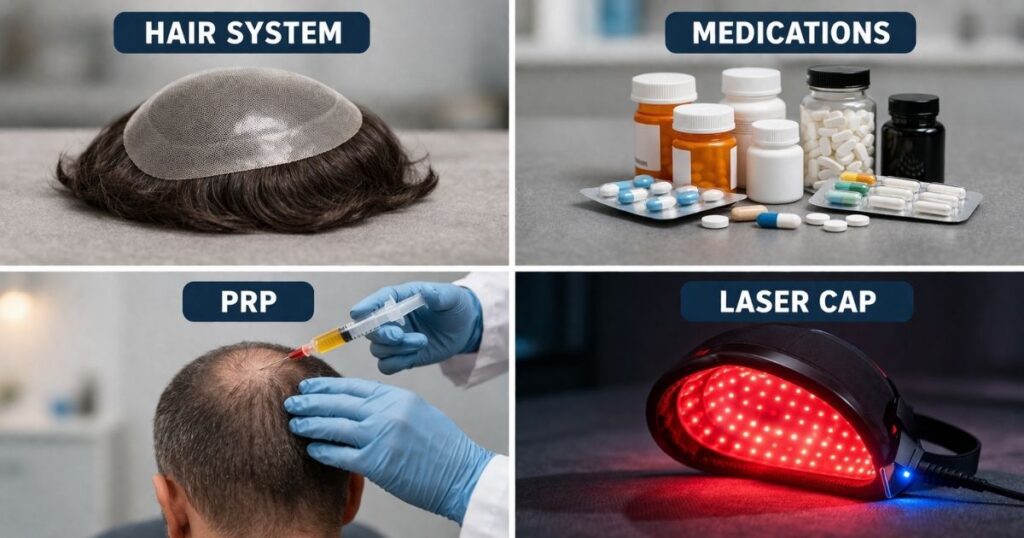

When hair begins to thin, the number of treatment options can feel overwhelming. Shampoos, supplements, medications, light therapy, and injections all compete for attention, and each comes with its own claims. Two of the options people ask about most often at aesthetic practices are laser cap treatment and PRP therapy, and the two work in very different ways.
This guide compares them side by side so you can understand how each works, what the experience feels like, and which one may suit your situation. It is meant to prepare you for a conversation with a qualified provider, not to replace one. If you are searching for a hair loss treatment in Westchester, understanding these differences will help you ask sharper questions and avoid unrealistic expectations.
Two Common Approaches to Hair Thinning
Laser cap treatment uses low-level light, delivered through a device worn on the head, with the aim of supporting activity in hair follicles. PRP therapy uses a concentrate made from your own blood, which is applied to the scalp, usually by injection, with the aim of supporting the environment around the follicles.
Both approaches target thinning that is still in a stage where follicles are present, which is why neither tends to work well for areas that have been completely bald for many years. Both are also usually part of a longer plan rather than a single event. Understanding that shared foundation makes the differences between them easier to evaluate.
How Laser Cap Treatment Works
A laser cap resembles a close-fitting cap lined with small light sources. The light is intended to reach the scalp and stimulate cellular activity in follicles that have weakened. Sessions are typically short, and the treatment is not invasive, which appeals to people who prefer to avoid needles.
What the Device Does
Low-level light therapy is thought to encourage follicles to remain in the growth phase longer and may improve scalp conditions that affect hair. Research on light-based hair treatments has produced mixed but encouraging findings for some groups, and results depend on factors such as the device, the pattern of hair loss, and how consistently the treatment is used.
How Often Treatments Are Used
Laser cap plans usually require regular sessions over many months, often several times each week for a set number of minutes. Because the benefit relies on consistency, it is important to choose a schedule that fits your life. Ask your provider whether sessions take place in the office, at home, or a combination of the two.
How PRP Therapy Works
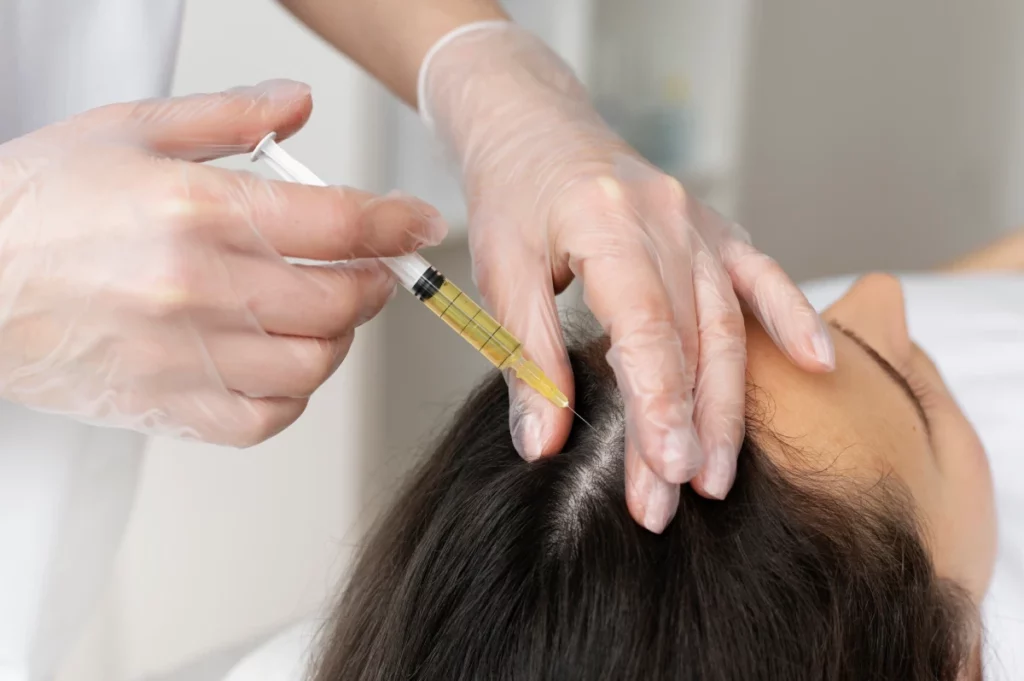
PRP begins with a small blood draw. The sample is spun in a centrifuge to concentrate platelets, which contain growth factors involved in tissue repair. The concentrate is then applied to the scalp through a series of fine injections. The goal is to support follicles that are present but not performing at their best.
A PRP series is typically spaced several weeks apart, followed by occasional maintenance visits. Because it is an in-office procedure performed by a trained clinician, the provider controls technique and dosing. Many people appreciate that the plan is clearly defined, with visits on a calendar rather than something they must remember to do daily.
Comparing Comfort and Downtime
Laser cap treatment is generally painless. Most people feel little or nothing aside from mild warmth, and there is no recovery period. PRP involves injections and a blood draw, so you may feel pressure or mild stinging, and temporary redness or tenderness can follow. Downtime for PRP is usually minimal but not zero.
If needles make you anxious, a laser-based plan may feel more comfortable. If you are comfortable with a brief procedure, PRP may be an acceptable trade-off. Remember that comfort is only one factor, and it should be balanced with your goals, your pattern of hair loss, and your provider’s recommendation.
Comparing Time Commitment
Both approaches require patience. Hair cycles are slow, and changes typically appear over several months. Laser cap treatment asks for frequent short sessions over a long period, while PRP asks for fewer but longer visits, with a set number of appointments at the start and maintenance later.
Think realistically about which routine you can sustain. A treatment that is easy to skip will not deliver its best results. Someone with a busy schedule may prefer a plan with fewer appointments, while someone who likes a steady routine may find regular sessions easier to maintain. Be honest with your provider about both options.
Comparing Cost Structure
Costs vary widely depending on the practice, the number of sessions, and whether a device is purchased or used in office. Laser cap plans may involve a package of sessions or the cost of a device, while PRP is usually priced per session or as a series.
Instead of comparing a single price, ask for a written estimate that covers the full recommended plan for the first six to twelve months, including any maintenance. This lets you compare the real cost of each option and avoid surprises. Be cautious of any provider who quotes a very low introductory price without explaining what follows.
Who May Prefer One Over the Other
People who want a non-invasive option and are comfortable with frequent sessions may lean toward laser cap treatment. People who prefer a defined series of visits and are comfortable with injections may lean toward PRP. Neither choice is right for everyone, and the pattern and stage of hair loss often matters more than personal preference.
Underlying causes also matter. If thinning is linked to a medical issue, such as a thyroid condition or nutritional deficiency, no cosmetic treatment will fully address it until the cause is evaluated. A careful provider will ask about your history and may recommend speaking with your physician as part of the plan.
Can You Combine Them?
Many practices use both approaches, along with topical or oral medications prescribed by a medical professional, because hair loss can be influenced by several factors at once. Combining services can address the scalp from different angles, but it also raises the cost and the time commitment.
If a provider suggests a combined plan, ask what each part is meant to do, how progress will be measured, and when you will reassess. A good plan has checkpoints, so you are not committing to an open-ended series without evidence that it is working for you.
Questions to Ask Before You Decide
Ask what is likely causing your hair loss, which option the provider recommends and why, how many sessions you will need, how long before you can expect to see a change, and what happens if you do not respond. Ask how results are tracked, including whether photos are taken in consistent lighting.
If you are looking for hair loss treatment in Westchester, Skin Theory Aesthetics in Mount Kisco offers consultations where you can talk through laser cap and PRP options and learn what may suit your hair and your goals. Bring photos and a list of medications to help the provider build an accurate plan for you.
Frequently Asked Questions
Is laser cap treatment painful?
Laser cap treatment is generally painless. Most people feel little more than mild warmth, and there is no downtime, which is why it appeals to people who want to avoid needles or injections.
Which works better, laser cap or PRP?
Neither is better for everyone. Results depend on your pattern of hair loss, its cause, and how consistently you follow the plan, so a provider consultation is the best way to choose.
Can I use laser cap treatment and PRP together?
Many practices combine them, sometimes with prescribed medications. Ask your provider what each part of the plan is meant to do and how progress will be measured before committing.