
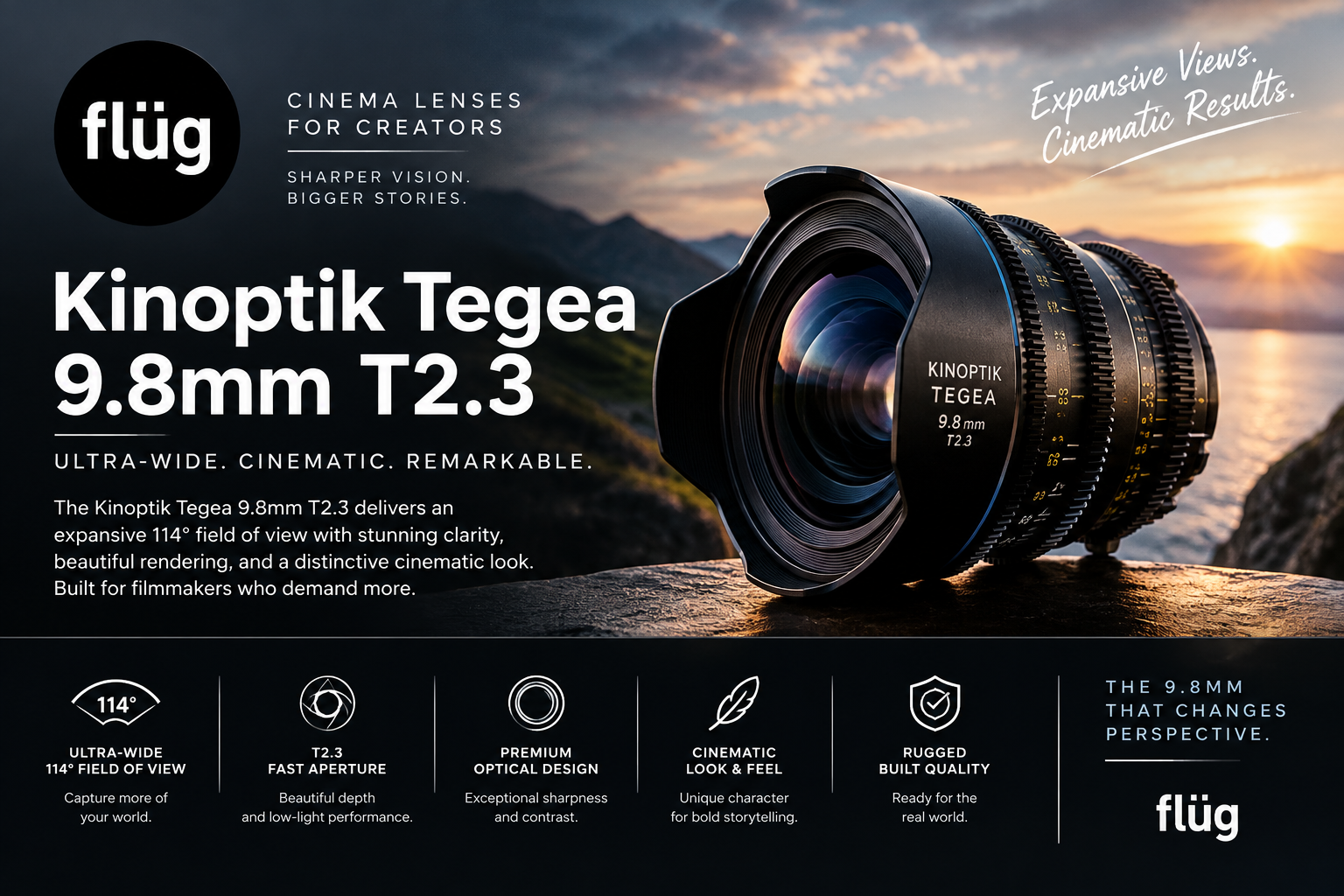

The Kinoptik Tegea 9.8mm T2.3 is one of the lenses that people name first when they talk about vintage cinematography. It was introduced in the mid 1960s by a French optical maker. At that time it was the widest rectilinear lens available for 35mm film. Directors and cinematographers later used it in some of the most recognized films of the last sixty years. Its design and its glass and its visual character all point back to a specific period in film history. This article explains why the lens carries that association. It covers the company behind it and the way it was built and the look it produces. It also covers the films that made it known and how crews use it today.
What Vintage Cinematography Means
The phrase vintage cinematography does not describe a single style. It refers to images shaped by older equipment and older methods. Film stocks and lighting and lenses all played a part. Lenses from the 1950s through the 1970s often have traits that modern lenses have been designed to avoid. Highlights may glow. Contrast may be lower. The edges of the frame may soften. Colors may lean warm.
Modern lenses aim for even sharpness and neutral color from corner to corner. That is useful for many projects. Some filmmakers want a different quality. They look for lenses that add texture and softness and a sense of the period when the lens was made. A vintage lens becomes a creative choice and not only a technical one.
The Kinoptik fits this idea well. It was built in a period of experiment in film language. Its optical traits are strong and easy to see. It also appeared in films that are still studied today. These three facts explain much of its reputation.
The Era Behind the Lens
The 1960s were a time of change in filmmaking. Lighter cameras allowed operators to move more freely. Directors tried long tracking shots and handheld work and unusual angles. Wide lenses became a tool for showing space and movement in a new way.
Before this period most wide angle lenses for 35mm film had limits. Many had visible curved distortion or restricted aperture. Filmmakers who wanted a very wide view often accepted these limits. A lens that gave a much wider view with straighter lines opened new options for the camera.
The Kinoptik arrived in this setting. It gave cinematographers a view wider than most of their other tools and it kept straight lines more natural than many competing designs. The timing helped. A new tool met a generation of directors who wanted to experiment.
Kinoptik: A French Optical Maker
Kinoptik was founded in 1932. The company began as a maker of precision glass. After World War II it moved toward cinema lenses for both 16mm and 35mm formats. It became known as the French counterpart to Cooke and Zeiss.
Its lenses used an Apochromat design. This approach aims to bring several colors of light to the same focus point. The goal is a sharper and cleaner image with less color fringing. Many users described the results as sharp and saturated with a dreamlike quality. In its time Kinoptik was often compared with the Speed Panchros and Planars and Distagons used by other filmmakers.
The company offered a broad range. Its catalog included macro lenses and fast lenses and telephoto lenses that reached 1000mm. Few small manufacturers covered such a wide range. This breadth helped establish the name among working cinematographers.
Optical Design: Why the Lens Is Unusual
The wide view of the lens comes from its structure. The front element is flat on the outside and deeply curved inward on the rear surface. This unusual shape allows the lens to gather light from a very wide angle. Most lenses of this focal length need a large and strongly curved front element. The Kinoptik design looks different from the outside.
Kinoptik introduced the 9.8mm in the mid 1960s along with a 5.7mm lens for 16mm film. The 9.8mm was described as a nominal f/1.8 lens. The cinema marking of T2.3 reflects the light actually transmitted by the glass. Cinematographers use T stops because they give a reliable exposure value from lens to lens.
The lens is rectilinear. That means it tries to keep straight lines straight across the frame. A fisheye lens bends lines into curves. The Kinoptik does show distortion near the edges but it reads as a stretched perspective and not a curved globe. This is one reason the Kinoptik Tegea 9.8mm T2.3 became useful for narrative work where a fisheye look would feel too extreme.
Rare Earth Glass and the Effect of Age
The glass inside the lens adds to its character. Kinoptik used rare earth elements in the glass formulas. These materials can improve optical performance. Over many decades they have also aged chemically. Cinematographers who use the lens describe the result as a visible change in how the lens handles light.
This aging is part of the reason that individual lenses look slightly different from one another. Coatings and glass and wear all vary. A user should expect personality and not perfect repeatability. For many filmmakers that is exactly the point. The lens offers an image that a modern design would not produce on its own.
The Visual Character of the Lens
Several traits define how the lens looks on screen. Each one connects to the vintage idea.
Glow around highlights. Bright lights and windows spread softly into the surrounding image. This effect is often called halation. It gives lamps and neon signs a gentle bloom.
Warm and lifted shadows. Dark areas do not fall to a deep black. They stay slightly raised and carry a warm tone. This softens the contrast of the scene.
A sharp center. The middle of the frame holds clear detail. Faces and objects placed near the center look crisp.
Strong fall off at the corners. Sharpness and brightness drop toward the edges. This can look like a soft vignette. It draws the eye inward.
Stretched perspective. Objects near the lens appear larger and objects near the edges stretch. The view feels exaggerated and sometimes unsettling.
Modern lens makers work to reduce most of these traits. That is why they are linked to older glass. A filmmaker who wants them must usually find a lens made in that period.
Films That Built the Reputation
A lens becomes part of film history through the work it helped create. The Kinoptik 9.8mm has a strong record.
I Am Cuba
The lens made its screen debut in 1964 in a Soviet and Cuban production called I Am Cuba. The film is known for long and flowing camera moves. The camera travels through crowds and rises into the sky in a single shot. The wide view allowed the camera to stay close to people while still showing the world around them.
A Clockwork Orange
Stanley Kubrick used the lens in the 1970s for scenes in A Clockwork Orange. It was mounted on a handheld Arri 2C. The lens placed the audience close to the characters and gave the world a strange and clear presence. The distortion matched the story’s uneasy tone.
The Shining
Kubrick also used the lens on The Shining. It was attached to Garrett Brown’s Steadicam as the camera followed Jack and Danny through the snowy hedge maze. The wide perspective and the smooth movement added tension to the climax of the film.
Chungking Express and Fallen Angels
In the 1990s cinematographer Christopher Doyle used the lens in his work with director Wong Kar Wai. Films such as Chungking Express and Fallen Angels show a restless and crowded Hong Kong. The lens gave the city a rushed and hallucinatory feel. In Fallen Angels Doyle added a Century wide angle adapter. This stretched faces and city views even further.
These examples cover several decades and several styles. The lens was used by a Soviet crew and an American director and a Hong Kong filmmaker. Each used it differently. That range is part of why the lens is seen as a classic and not only as a period piece.
Why These Films Matter to the Association
Film history shapes how people think about equipment. When a lens appears in respected films it gains a reputation. Students and cinematographers study those films and then look for the lens that produced the images.
The Kinoptik also has a clear visual signature. A viewer can often see the stretch and the glow even without knowing the lens name. This makes it a useful reference. A director can show a still from The Shining or Fallen Angels and say that this is the feeling they want. The lens then becomes a shared language between the director and the camera team.
Pairing the Lens With Other Vintage Glass
A film rarely uses only one focal length. Most projects need a set of lenses that match each other. Scheimpflug notes that the Kinoptik pairs well with vintage sets such as the Cooke Speed Panchro and the Super Baltar and the Zeiss Super Speeds. These lenses share a softer and more organic look than many modern designs.
A common approach is to use the 9.8mm as the widest lens in a vintage set. The other lenses cover standard and longer focal lengths. The Kinoptik is then reserved for scenes where a very wide view is needed. This keeps the overall look consistent while giving the filmmaker access to a dramatic perspective.
Matching is still important. Compare color and contrast and sharpness before the shoot. Even lenses from the same period can differ. A short test on the camera will show whether the set works together or whether adjustments are needed in the grade.
Using a Vintage Lens on Modern Cameras
Modern digital cameras differ from the film cameras used in the 1960s. A few practical points apply when a vintage lens is used today.
Mounts and adapters. Vintage lenses often need an adapter to fit a modern camera body. Confirm that the correct mount is available and that it sits securely.
Sensor coverage. Older lenses were designed for specific film formats. The image circle may not cover every modern sensor or recording mode. Test the lens at the planned settings and look for dark corners.
Focus accuracy. Vintage lenses may have different focus scales and marks. A focus puller should check marks against a monitor and a test chart before the first take.
Lighting and flare. Older coatings react to light differently than new ones. Bright sources near the frame can create glow or flare. Test with the actual lights planned for the scene.
Handling. Vintage lenses can be delicate. Crews should treat them with care and keep them clean and protected during moves between locations.
A rental house with a full camera department helps with these checks. The Camera Rental In NYC department at Scheimpflug in Chelsea offers cinema cameras and lenses and accessories. Crews can test the lens on a modern body before the shoot day.
The Vintage Look in Visual Effects Work
Many modern productions combine filmed images with digital elements. When a film is shot on a vintage lens the digital work must match the lens. The glow around highlights and the edge distortion and the corner fall off all need to appear on the added elements. Otherwise the digital pieces look too clean next to the real footage.
Artists often study a test chart shot with the lens. They measure how lines bend and how the corners soften. They then apply the same effects to the digital elements.
Scans can support this work. A production that needs a digital double of an actor can use 3D body and head scanning NYC studios provide to capture the face and body in high detail. The model can then be rendered through the same lens distortion as the filmed footage. A location can also be recorded in advance. LiDAR scanning NYC crews gives the effects team exact room dimensions. This helps them place digital objects with the right scale and perspective in a frame shot on a very wide lens.
These steps are not needed on every project. They matter when a vintage lens and visual effects appear in the same shot.
Preparing for a Shoot With the Lens
Careful preparation helps a production get the most from a vintage lens. A few steps are worth the time.
Start with a camera test day. Shoot a grid chart and a few scenes with the planned lights. Look at distortion and flare and corner softness on a large monitor.
Review the footage with the director and the colorist. Decide how much of the lens character should remain in the final image. Some projects keep it fully. Others soften the effect in the grade.
Check the location and plan the camera position. A very wide lens sees almost the entire room. Crew and equipment can appear at the edges. For a difficult location a lidar record can help the team test positions before the day. Productions that want to rent film equipment new york teams trust can arrange the lens and the camera and the lighting together. This keeps the order simple and reduces the number of vendors to manage.
Finally plan for the pairing. If the Kinoptik will sit next to other vintage lenses rent the full set together and test it as one package.
Limits to Keep in Mind
The lens is not the right choice for every shot. Its distortion can look unflattering on faces placed near the camera. The soft corners and the glow may reduce clarity in scenes that need a clean and neutral look. The unusual design also means careful handling and testing.
Some productions solve this by using the lens only for selected shots. The rest of the film is shot on lenses with a more even look. This gives the filmmaker a tool for special moments without committing the whole project to one style.
Conclusion
The Kinoptik Tegea 9.8mm T2.3 is linked to vintage cinematography for several connected reasons. It comes from a French maker with a strong reputation. Its design was unusual and its view was wider than most lenses of its time. Its glass has aged in a way that adds glow and warmth and a distinct falloff. It also appears in films by respected directors across several decades.
For filmmakers today the lens offers a way to bring that history into a new project. Careful testing and planning help the lens work well with modern cameras and with digital effects. Productions that need support can arrange cameras and lenses and scans through one company and keep the whole process connected.
Frequently Asked Questions
Q: Why is the Kinoptik 9.8mm linked to vintage cinematography?
A: It was introduced in the mid 1960s and was the widest rectilinear lens for 35mm film at the time. Its aged glass produces glow and warm shadows. It also appeared in films by Kubrick and Christopher Doyle.
Q: Which films used the Kinoptik Tegea 9.8mm?
A: Notable films include I Am Cuba and A Clockwork Orange and The Shining. Cinematographer Christopher Doyle also used it in Chungking Express and Fallen Angels. Each film used the wide view and distortion in a different way.
Q: What does the lens look like on screen?
A: The image has a soft glow around bright highlights and slightly lifted warm shadows. The center is sharp and the corners fall off. Objects near the lens look stretched and larger than normal.
Q: Can the lens be used with modern digital cameras?
A: Yes with the right mount or adapter. Crews should test coverage for the chosen sensor and recording mode. Checking focus marks and flare before the shoot helps avoid problems during filming.
Q: Which lenses pair well with the Kinoptik 9.8mm?
A: Scheimpflug notes that it pairs well with vintage sets such as Cooke Speed Panchro and Super Baltar and Zeiss Super Speeds. These lenses share a soft and organic look. Testing the set together confirms the match.

