

Introduction
The kitchen is one of the busiest areas in a home. It is where meals are prepared, family members gather, and daily activities take place. Because this space experiences frequent foot traffic, food spills, water splashes, and regular cleaning, choosing the right flooring is essential. Homeowners want a surface that looks attractive while handling the practical demands of everyday use.
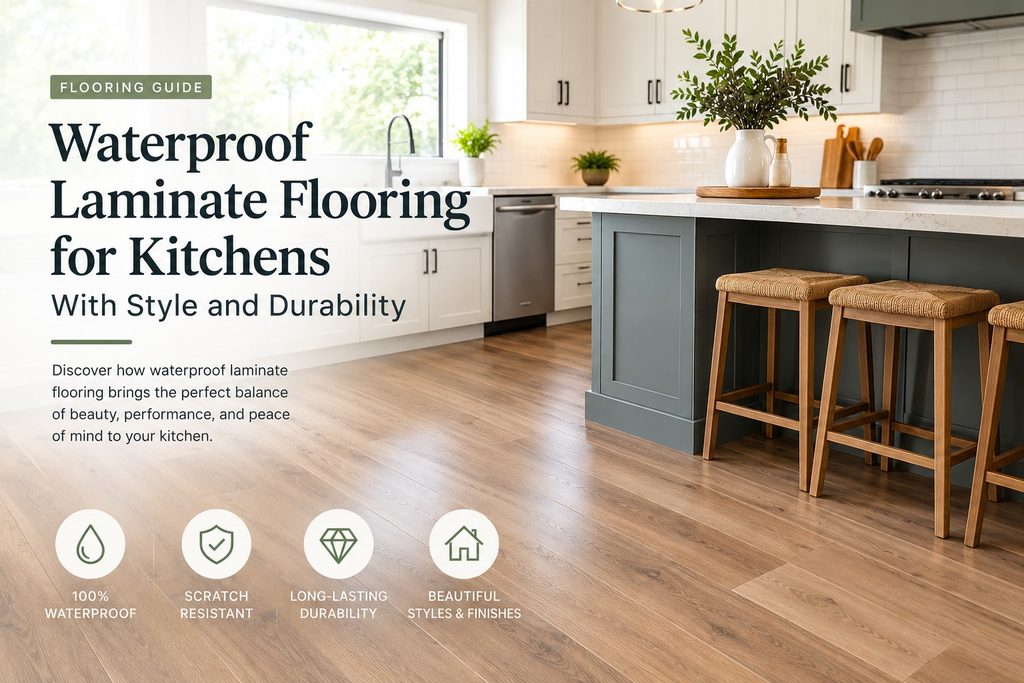
Waterproof laminate flooring for kitchens is an option worth exploring for homeowners who appreciate the appearance of natural wood but want additional protection against moisture. Modern flooring products offer a variety of colors, textures, plank sizes, and finishes, making it easier to coordinate the floor with kitchen cabinets, countertops, and other design features.
However, not every laminate product provides the same level of moisture protection. Traditional laminate may swell or become damaged when water enters its core, while products marketed as waterproof are designed with specific construction features to resist water under stated conditions. Understanding these differences is important before purchasing.
This guide explains the benefits, design possibilities, selection criteria, installation requirements, and maintenance practices that can help homeowners make an informed decision.
What Is Waterproof Laminate Flooring?
Laminate flooring is a multi-layer flooring product designed to reproduce the appearance of materials such as wood or stone. A typical product includes a protective wear layer, a decorative image layer, a core board, and a balancing layer.
The core is often made from high-density fiberboard. In conventional laminate products, prolonged exposure to water can cause the core to swell. Waterproof laminate products use specially designed construction, treated edges, tighter locking systems, or other protective features to reduce water penetration.
The term “waterproof” should always be checked against the manufacturer’s specifications. Some products protect against surface spills for a defined period but may not withstand flooding, water entering through the perimeter, or moisture coming from beneath the floor.
Waterproof vs. Water-Resistant Laminate
These terms are not interchangeable.
- Water-resistant laminate: Designed to withstand limited moisture exposure when spills are cleaned promptly and the product is maintained correctly.
- Waterproof laminate: Designed to prevent water from damaging the flooring under the specific conditions stated by the manufacturer. The protection period and installation requirements vary by product.
Before buying, read the product warranty and installation instructions carefully. Confirm whether the warranty covers kitchen use, standing water, seams, and water exposure around sinks or dishwashers.
For additional guidance on moisture-resistant options, read the Parma Floors guide to water-resistant laminate flooring.
Why Consider Waterproof Laminate Flooring for Kitchens?
Kitchen floors need to balance appearance and functionality. Flooring must complement the room while accommodating spills, dropped food, chair movement, and regular cleaning.
1. Better Protection Against Everyday Spills
Water can reach the floor around sinks, dishwashers, refrigerators, and food preparation areas. A product designed for waterproof performance can provide an extra layer of protection against surface spills when installed and maintained according to the manufacturer’s instructions.
This can be particularly useful in busy households where minor accidents happen regularly. However, spills should still be cleaned promptly. Waterproof flooring does not eliminate the risk of damage caused by leaks, flooding, or moisture entering through unprotected edges and the subfloor.
2. Attractive Wood-Inspired Designs
Many homeowners like the warmth of wood but want a floor that suits the practical demands of a kitchen. Laminate is available in designs inspired by oak, walnut, and other wood species.
Options range from pale natural finishes to medium brown tones and darker colors. Textured surfaces can also recreate the appearance of wood grain, helping the floor coordinate with both traditional and contemporary kitchen designs.
3. Practical Everyday Maintenance
Many laminate products can be maintained with regular sweeping or vacuuming and cleaning methods approved by the manufacturer. Removing grit helps reduce surface scratches, while prompt spill cleanup helps protect joints and edges.
Always check the product’s care instructions. Some laminate flooring products require specific cleaners and do not tolerate steam cleaning or excessive water.
4. A Wide Range of Design Choices
Kitchen flooring plays an important role in the overall appearance of a room. Light colors can make a compact kitchen feel more open, while darker finishes create contrast against lighter cabinets.
A natural oak design can complement white cabinetry, stone countertops, and brushed-metal fixtures. Grey and neutral finishes may work well with contemporary kitchens that feature clean lines and understated colors.
Popular Design Ideas for Modern Kitchens
The right finish depends on your room’s size, lighting, cabinets, countertops, and personal preferences. Consider the entire space rather than selecting a floor based on a small sample alone.
Light Oak for Bright, Airy Spaces
Light oak-inspired flooring is a versatile choice for kitchens with white cabinets, pale walls, or natural materials. Its soft appearance can help a small kitchen feel less crowded and create a calm, welcoming atmosphere.
This style also pairs well with open shelving, neutral backsplashes, and simple hardware.
Medium Brown for a Warm Interior
Medium brown laminate creates a balanced look that works with cream, beige, white, and many wood finishes. It can provide enough contrast to define the floor without making the room feel too dark.
This option suits both traditional kitchens and modern spaces that incorporate natural textures.
Grey and Neutral Finishes for Contemporary Homes
Grey, greige, and muted neutral flooring can complement modern cabinets, stainless steel appliances, and minimalist furnishings. These colors can also help connect the kitchen with adjoining dining or living areas.
Check the undertone before choosing a finish. Some grey products appear cool under daylight but warmer under indoor lighting.
Wide Planks for an Open Look
Wider planks can create a more continuous appearance, especially in open-plan kitchens. Fewer visible seams may help the floor feel less busy, although the final effect depends on the room’s dimensions and plank layout.
Always verify the recommended installation pattern and expansion requirements for the selected product.
How to Choose the Right Laminate for Kitchen Floors
Appearance matters, but technical specifications determine whether a product is suitable for a kitchen. Compare the following factors before placing an order.
Check the Waterproof Performance
Look for a clear explanation of the product’s water protection. Ask how long surface spills can remain before they must be cleaned, whether the locking joints are protected, and whether the warranty specifically covers kitchen installation.
Do not rely on the word “waterproof” alone. Read the warranty exclusions and installation requirements, especially around appliances, sinks, and perimeter edges.
Review the Wear Layer and Surface Protection
The wear layer helps protect the decorative surface from everyday abrasion. Product construction and performance vary, so compare the manufacturer’s specifications rather than assuming every laminate floor has the same durability.
For kitchens with children, pets, or frequent visitors, consider a product designed for the expected level of use. No laminate floor is completely scratch-proof, and heavy objects can still damage the surface.
Consider Core Construction
The core affects how the flooring responds to impact, moisture, and daily use. Many conventional laminate products use wood-based fiberboard, while waterproof variants may incorporate additional edge treatments or protective systems.
Ask the supplier for technical documentation that explains the construction and intended applications of the exact product.
Check the Warranty
A warranty can help explain the manufacturer’s stated performance expectations, but it is not a substitute for reading the product instructions.
Confirm whether the warranty applies to residential kitchen use and whether it excludes damage caused by flooding, plumbing leaks, improper installation, or unsuitable cleaning methods. Keep the purchase receipt and product documentation for future reference.
Comparing Laminate With Other Kitchen Flooring Options
Laminate is only one option for a kitchen. Comparing alternatives can help you decide which material best matches your priorities.
Laminate vs. Engineered Hardwood
Engineered hardwood features a real wood surface over a layered core. It offers natural grain and texture, making it appealing to homeowners who prefer authentic wood.
However, wood-based products require attention to moisture and indoor conditions. Waterproof laminate may offer a practical alternative when a homeowner prefers a wood-inspired appearance with product-specific moisture protection.
Explore Parma Floors’ engineered hardwood flooring collection to compare natural wood options and finishes.
Laminate vs. SPC Flooring
SPC flooring is a rigid-core vinyl product commonly made using limestone powder, PVC, and stabilizing additives. Many SPC products are designed to be waterproof, which can make them suitable for kitchens when installed according to the manufacturer’s specifications.
Laminate often appeals to buyers who prefer its surface texture and wood-like appearance. SPC may be worth considering where waterproof performance is a priority.
Explore SPC flooring options at Parma Floors and compare the specifications of individual products before making a decision.
Laminate vs. Tile
Tile is a common kitchen flooring choice because many tile surfaces resist water and are easy to clean. However, the installation can involve more preparation, and grout lines may require additional care.
Laminate may offer a different underfoot feel and a wood-inspired appearance. The best choice depends on budget, subfloor conditions, design preferences, maintenance expectations, and the manufacturer’s recommendations.
Installation Tips for Better Performance
Correct installation is essential for the performance of any kitchen floor. Even a well-made product may fail if it is installed over a damp or uneven subfloor or if the manufacturer’s requirements are ignored.
Prepare the Subfloor
The subfloor should meet the product’s requirements for flatness, cleanliness, dryness, and structural soundness. Uneven surfaces can cause movement or stress at the joints, while moisture beneath the floor can damage certain materials.
Resolve any moisture problems before installation. Do not install flooring over a subfloor that does not meet the manufacturer’s specifications.
Follow Acclimation Instructions
Some laminate products require acclimation before installation, while others have different handling instructions. Follow the exact guidance provided for your selected product rather than assuming every flooring type requires the same process.
Store materials under the conditions specified by the manufacturer and avoid exposing cartons to moisture before installation.
Allow for Expansion Where Required
Many floating laminate floors need expansion gaps around walls, cabinets, pipes, and other fixed objects. These gaps allow the floor to respond to changes in indoor conditions.
Follow the installation guide for the required gap size and finishing details. Incorrectly restricting floor movement can contribute to buckling or joint problems.
Use Compatible Underlayment
Some laminate products require a separate underlayment, while others include an attached backing. The correct choice depends on the product, subfloor, and installation method.
Using an unapproved underlayment can affect stability, sound performance, and warranty coverage. Check the installation instructions before purchasing additional materials.
For product-specific guidance, consult the Parma Floors laminate installation guide.
How to Maintain Kitchen Laminate Flooring
Good maintenance habits help preserve the appearance of the floor and reduce avoidable wear.
Clean Spills Promptly
Wipe up water, cooking liquids, and food spills as soon as possible. Pay particular attention to the areas around sinks, dishwashers, refrigerators, and other appliances where leaks may occur.
If a leak happens, address its source and inspect the surrounding flooring. Waterproof surface protection does not necessarily prevent water from reaching the subfloor or adjacent materials.
Remove Dirt and Grit Regularly
Sweep or vacuum the floor to remove dirt and abrasive particles. Grit can cause fine scratches when it is walked across or moved under furniture.
Use a vacuum attachment suitable for hard floors and avoid tools that may scratch the surface.
Use Approved Cleaning Products
Follow the manufacturer’s instructions for cleaning solutions and mopping. Avoid soaking the floor, using harsh abrasive cleaners, or applying steam unless the product manufacturer explicitly permits it.
Excessive moisture can affect joints and edges even when the surface is designed to resist water.
Protect the Floor From Furniture
Use suitable protective pads under chairs, tables, and movable furniture. Lift heavy objects instead of dragging them across the surface.
Entrance mats can help reduce the dirt and moisture brought into the kitchen. Ensure that mats are compatible with the flooring finish and do not trap moisture beneath them.
Common Mistakes to Avoid
Selecting the right product is only part of the process. Avoiding common mistakes can help protect your investment.
Assuming every laminate product is waterproof: Moisture performance varies significantly. Confirm the exact product’s specifications and warranty.
Choosing by appearance alone: A beautiful finish may not be appropriate for a high-use kitchen. Review wear protection, moisture requirements, and maintenance instructions.
Ignoring the subfloor: Moisture or unevenness beneath the flooring can cause problems after installation. Check the subfloor before beginning work.
Using too much water during cleaning: Even products designed for kitchen use have care requirements. Follow the manufacturer’s recommended cleaning method.
Skipping warranty details: Installation errors, flooding, or unapproved cleaning products may affect warranty coverage. Read the terms before purchasing.
Is Waterproof Laminate the Right Choice for Your Kitchen?
This flooring can be a suitable choice for homeowners who want a wood-inspired appearance and additional protection against everyday spills. It is available in styles that work with many kitchen designs, from bright minimalist spaces to warm traditional interiors.
However, the best option depends on the product’s documented performance, the room’s moisture conditions, and the household’s maintenance habits. If standing water or frequent leaks are likely, compare other materials specifically designed for wet environments.
Start by identifying your kitchen’s practical needs, then compare product specifications, samples, warranties, and installation requirements. You can browse the Parma Floors flooring collection to explore available materials and styles.
Conclusion
Waterproof laminate can combine a natural-looking finish with practical features for a busy kitchen, provided the product is genuinely designed for the intended conditions. Its variety of colors and textures makes it possible to coordinate the floor with cabinets, countertops, and adjoining rooms.
Before making a purchase, verify the product’s moisture protection, wear characteristics, installation requirements, and warranty coverage. Proper subfloor preparation, prompt spill cleanup, and suitable maintenance also contribute to long-term performance.
By comparing laminate with alternatives such as engineered hardwood and SPC, homeowners can choose a flooring product that fits their design preferences and everyday needs.
Frequently Asked Questions
Q: Is waterproof laminate flooring suitable for kitchens?
A: It can be suitable when the manufacturer specifically approves the product for kitchen use. Check the stated water protection period, installation instructions, and warranty exclusions. Promptly clean spills and address leaks to help prevent moisture from reaching the subfloor.
Q: What is the difference between waterproof and water-resistant laminate?
A: Water-resistant laminate is designed to withstand limited moisture exposure under specified conditions. Waterproof laminate is designed to prevent water damage within the limits stated by the manufacturer. Neither term should be interpreted as protection against every type of flooding or installation failure.
Q: How do I clean laminate flooring in a kitchen?
A: Sweep or vacuum regularly, wipe spills promptly, and use a damp mop only if the manufacturer permits it. Choose approved cleaning products and avoid excessive water, abrasive tools, and steam cleaning unless explicitly allowed by the product instructions.
Q: Is laminate or SPC better for a kitchen?
A: Both can be suitable, depending on the specific product. Some laminate products offer moisture protection and wood-inspired designs, while many SPC products are designed to be waterproof. Compare technical specifications, installation requirements, maintenance, and warranty conditions before deciding.
Q: Can waterproof laminate be installed over existing kitchen flooring?
A: Some products can be installed over an existing floor if the surface is approved, stable, clean, dry, and sufficiently level. Remove unsuitable materials and address moisture problems first. Always follow the manufacturer’s installation instructions before installing over an existing surface.