
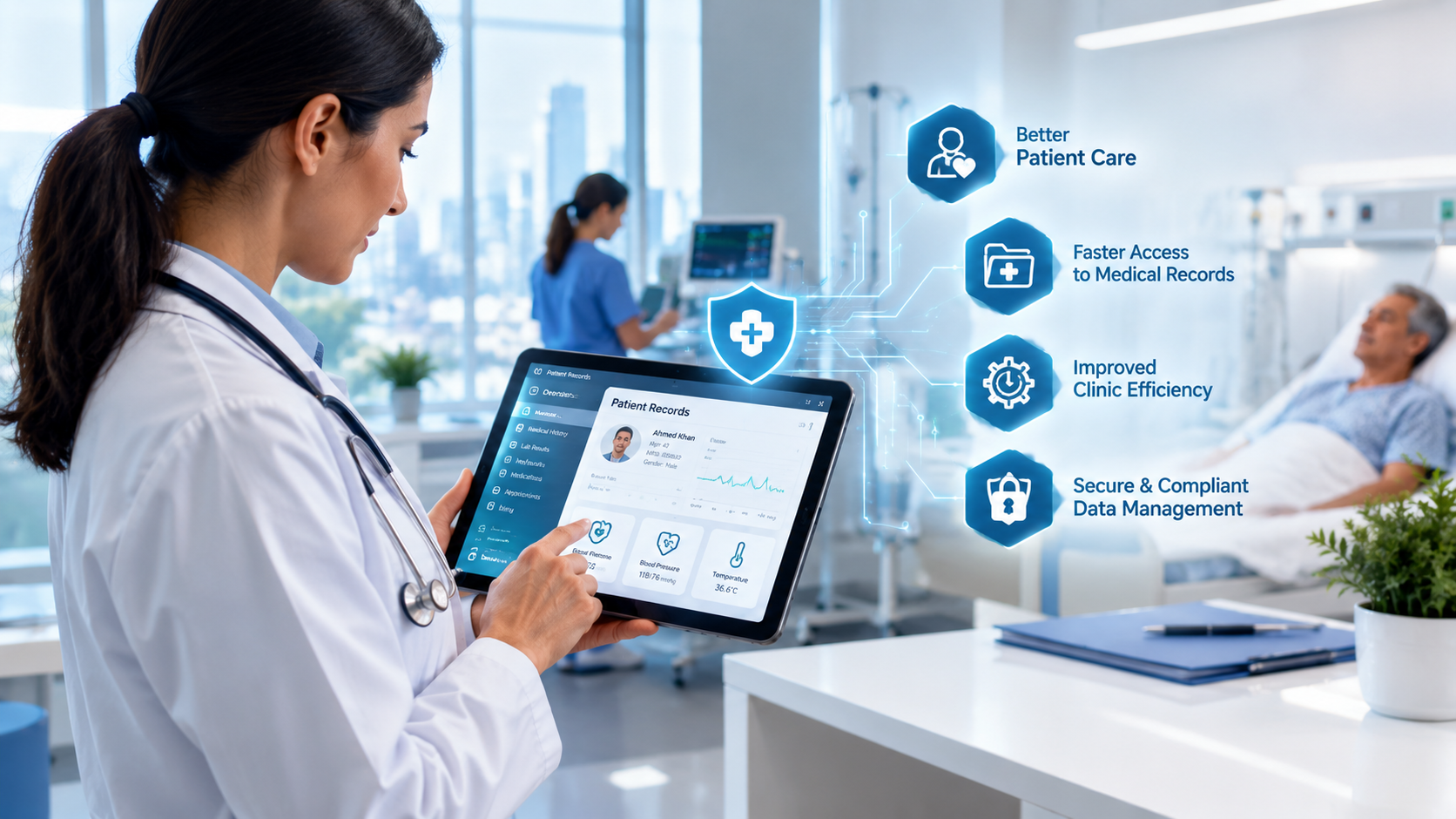

A patient waits twenty extra minutes at a clinic, not because the doctor is behind schedule, but because the front desk is manually re-entering information that already exists somewhere in the system just not in a format the current screen can pull up. Multiply this small delay across every patient, every day, and the clinic quietly loses hours of capacity that better technology could have reclaimed. This is exactly the kind of everyday friction that properly implemented Healthcare IT Solutions are designed to eliminate, giving clinics and hospitals the tools to run more efficiently while actually improving the quality of care patients receive.
Healthcare has always balanced two priorities that can feel like they’re in tension delivering excellent patient care while managing the practical realities of running a clinic or hospital efficiently. Modern IT solutions are increasingly proving that these two goals aren’t actually in conflict. Done well, better technology supports both simultaneously.
Why Clinic Operations Directly Affect Patient Care
It’s tempting to think of clinical care and administrative operations as separate concerns, but they’re deeply connected. A clinic bogged down by inefficient scheduling, slow record retrieval, or disconnected systems inevitably passes that friction along to patients longer wait times, rushed appointments, and providers spending valuable time on administrative tasks instead of focused patient interaction.
Healthcare IT solutions address this connection directly, streamlining the operational side of healthcare delivery so that the time and attention saved can go back toward what actually matters most: the quality of care patients receive.
Key Ways This Technology Is Making a Difference
1. Streamlined Patient Records and Faster Access to History
Unified electronic health record systems mean providers can access a patient’s complete history instantly, rather than waiting on records to be pulled from separate departments or previous providers. This speeds up diagnosis, reduces repeated questions that frustrate patients, and helps providers make better-informed decisions from the very start of an appointment.
2. Smarter Scheduling That Reduces Wait Times
Modern scheduling systems account for appointment complexity, provider availability, and typical visit durations far more intelligently than manual booking ever could. This reduces the kind of scheduling bottlenecks that lead to overcrowded waiting rooms and frustrated patients sitting well past their appointment time.
3. Automated Administrative Workflows
Billing, insurance verification, and appointment reminders can all be automated through well-integrated IT systems, freeing administrative staff from repetitive manual tasks and reducing the errors that tend to creep in when the same information gets re-entered across multiple disconnected systems.
4. Better Coordination Across Departments and Providers
When lab results, imaging, pharmacy records, and specialist notes all flow through connected systems rather than isolated silos, care coordination improves dramatically. Providers spend less time chasing down information and more time acting on it, which directly benefits patient outcomes, especially for patients managing multiple conditions across several specialists.
5. Remote Monitoring and Telehealth Integration
Healthcare IT solutions increasingly support remote patient monitoring and telehealth consultations as a genuine extension of in-clinic care, rather than a separate, disconnected service. This allows providers to maintain contact with patients between visits, catching potential issues earlier and reducing the need for unnecessary in-person appointments for concerns that can be addressed remotely.
6. Reduced Errors Through System Integration
A significant share of healthcare errors trace back to manual data entry and miscommunication between disconnected systems. Integrated IT solutions reduce this risk considerably by allowing data to flow automatically between systems rather than being manually transferred, cutting out one of the most common sources of preventable mistakes.
Why Data Security Deserves Equal Attention
None of these operational improvements matter if patient data isn’t properly protected. Healthcare data is among the most sensitive information handled by any industry, and the increasing connectivity between systems that drives these operational benefits also increases the number of potential entry points a breach could exploit. Recent coverage on how KSI Keyboards Protect Patient Data in Qatar’s healthcare facilities highlights just how far security considerations now extend down to the physical hardware clinics use daily, not just the software layer most people initially think of when discussing healthcare cybersecurity.
Proper healthcare IT implementation treats security as a foundational requirement built in from the start, covering everything from network architecture to the individual devices staff use to access patient information every day.
The Patient Experience Impact
Patients notice the difference when clinic operations run smoothly. Shorter wait times, providers who already have their full history without needing to ask repetitive questions, and simpler processes for scheduling and follow-up all contribute to a patient experience that feels considerably more respectful of their time and more attentive to their actual needs. This isn’t a minor convenience patient satisfaction increasingly influences which providers people choose to continue seeing and recommend to others.
What Effective Implementation Actually Requires
Adopting healthcare IT solutions successfully requires more than simply purchasing new software. Clinics need a clear understanding of their specific operational pain points, careful planning to ensure new systems integrate properly with existing workflows rather than disrupting them, and thorough staff training so that new tools actually get used effectively rather than creating additional confusion during the transition.
Working with partners who understand both the technical requirements and the practical, day-to-day realities of running a clinic or hospital makes this transition considerably smoother, reducing the disruption that often accompanies major technology changes in a healthcare setting.
Looking Ahead
Healthcare IT continues evolving quickly, with growing use of AI-assisted diagnostics, more sophisticated remote monitoring capabilities, and deeper interoperability between previously disconnected systems across different providers and facilities. Clinics and hospitals investing in flexible, well-integrated IT infrastructure now are positioning themselves to adopt these emerging capabilities more smoothly as they mature, rather than facing another disruptive overhaul in just a few years.
Final Thoughts
Healthcare IT solutions have moved well past being a background administrative concern, becoming a genuine driver of both operational efficiency and patient care quality. Clinics and hospitals that invest thoughtfully in properly integrated, secure technology are giving their providers more time and better information to focus on what matters most, while giving patients a smoother, more respectful care experience along the way.
The healthcare providers seeing the strongest results from this shift aren’t necessarily the ones with the biggest technology budgets. They’re the ones that treated IT investment as a genuine extension of patient care, not just a separate administrative upgrade running quietly in the background.