
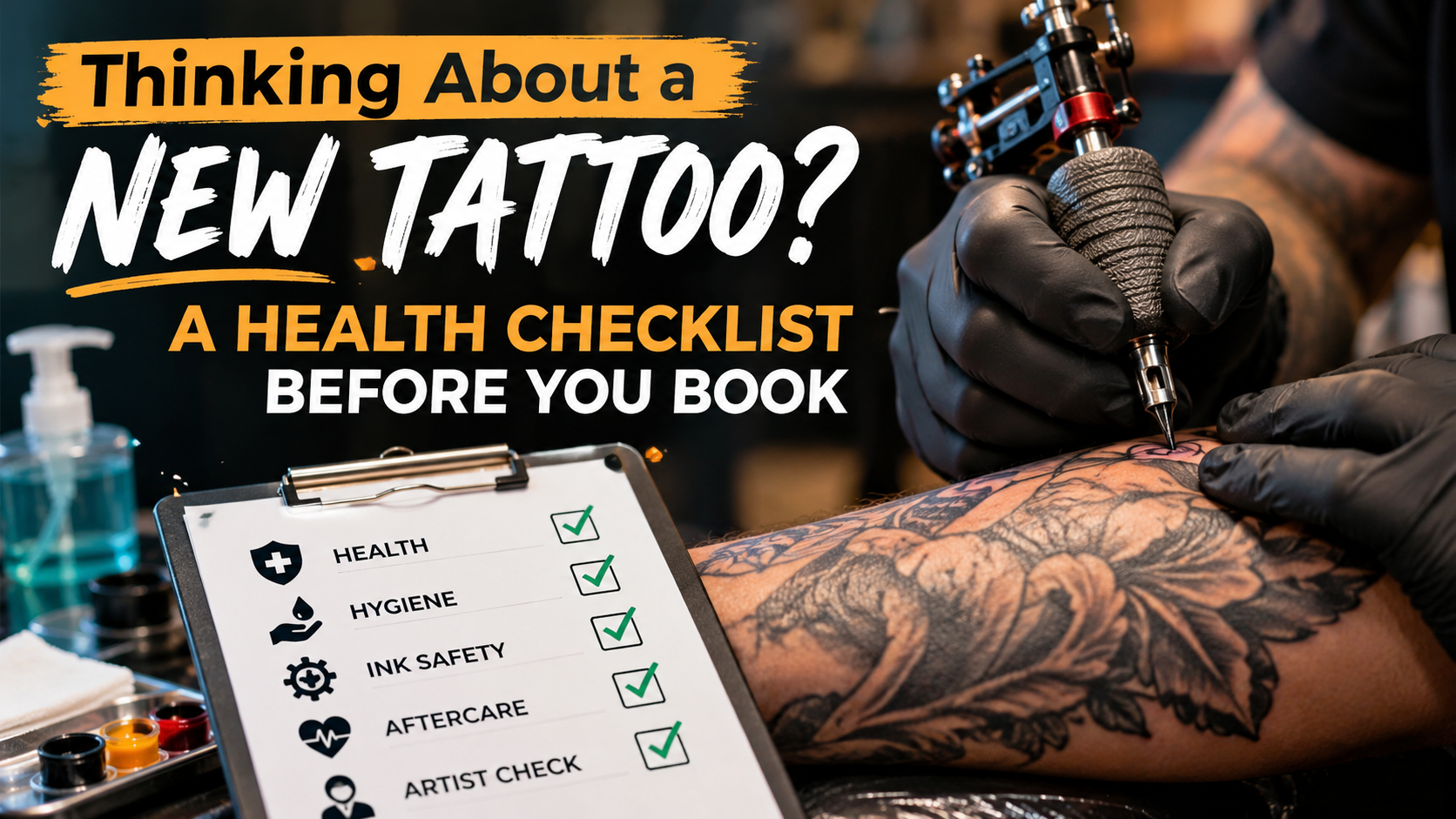

Tattoos are more popular than ever. For many people, they mark milestones, honor loved ones or simply celebrate personal style. But a tattoo is also a minor skin procedure. Thousands of needle punctures carry ink into the skin, so a little health planning beforehand can make the difference between a smooth recovery and an uncomfortable one.
Whether it’s your first tattoo or your fifth, here’s what to consider before you sit down in the artist’s chair.
Check In With Your Health First
Most healthy adults heal from a tattoo without problems. Some conditions and medications can change how your body handles the process, though:
- Diabetes: High blood sugar can slow wound healing and raise the risk of infection. If your diabetes is well controlled, a tattoo may be fine. Talk with your doctor if your numbers have been running high.
- Blood thinners: Medications such as warfarin, and even daily aspirin, can increase bleeding during a session. Don’t stop any prescribed medication on your own. Ask your provider how to plan safely.
- Weakened immune system: Chemotherapy, long-term steroid use, autoimmune conditions and some other treatments can make infections more likely and harder to fight.
- Skin conditions: Eczema, psoriasis or keloid scarring in the area you want tattooed can affect both healing and how the tattoo looks.
- Allergies: Some people react to tattoo pigments, especially red ink. If you have a history of skin sensitivities, ask your artist about a small patch test.
If you manage a chronic condition, a quick conversation with your primary care provider before booking is a smart step. It’s also a good time to make sure your vaccinations, including hepatitis B and tetanus, are up to date.
Choose a Licensed, Clean Studio
The biggest health risks of a tattoo come from poor hygiene. Unsterile equipment can spread bloodborne infections such as hepatitis B, hepatitis C and HIV, along with bacterial skin infections like staph.
In Texas, tattoo studios must be licensed by the Department of State Health Services. Before you book, look for these signs:
- A current studio license displayed where you can see it
- Artists who wash their hands and wear fresh gloves for every client
- Needles and single-use supplies opened from sealed packages in front of you
- Ink poured into single-use cups, not dipped from shared bottles
- Work surfaces that are cleaned and covered between clients
An artist’s experience matters too. A skilled artist works efficiently and with a steady hand, which means less unnecessary trauma to your skin. Most professionals spend months or even years building their technique before they ever work on a client, often starting with tattoo practice skin, a synthetic material that mimics the feel of real skin. Ask to see an artist’s portfolio, and don’t hesitate to ask how long they’ve been tattooing.
Experienced artists also invest in quality equipment and keep it well maintained. Many rely on modern rotary machines because they run quietly and smoothly. Artists often compare the best tattoo rotary machines to find dependable tools that support clean, precise work. Don’t be shy about asking your artist how they clean and maintain their equipment. A professional will be glad to explain.
Prepare Your Body for the Session
A little preparation helps you feel better during the appointment and may help you heal faster afterward:
- Get a good night’s sleep and eat a full meal beforehand to help prevent lightheadedness.
- Stay hydrated in the days leading up to your appointment.
- Avoid alcohol for at least 24 hours before. It can thin the blood and increase bleeding.
- Skip the session if you’re sick. A cold, fever or skin infection is a good reason to reschedule.
Aftercare: Where Healing Happens
The surface of a new tattoo usually heals in about two to four weeks. Deeper skin layers can take longer. During that time, follow your artist’s aftercare instructions closely. In general:
- Keep the area clean with mild, fragrance-free soap and lukewarm water.
- Apply a thin layer of the recommended ointment or unscented moisturizer.
- Avoid swimming pools, hot tubs, lakes and baths until the skin has fully healed.
- Keep the tattoo out of direct sun, and don’t pick at scabs or peeling skin.
Know the Warning Signs
Some redness, mild swelling and tenderness are normal in the first few days. Contact your healthcare provider if you notice:
- Redness or swelling that spreads or gets worse after the first few days
- Pus, a foul smell or red streaks moving away from the tattoo
- Fever or chills
- Severe itching, a rash or raised bumps that appear weeks or even months later
These can be signs of an infection or allergic reaction, and early treatment matters.
The Bottom Line
A tattoo can be a meaningful, lasting form of self-expression. Taking care of your health before and after your appointment helps make sure it heals beautifully. If you have a chronic condition, take regular medications or simply have questions, your primary care provider is a great partner in planning ahead. Visit The Studio Sidekick for more tattoo content.