
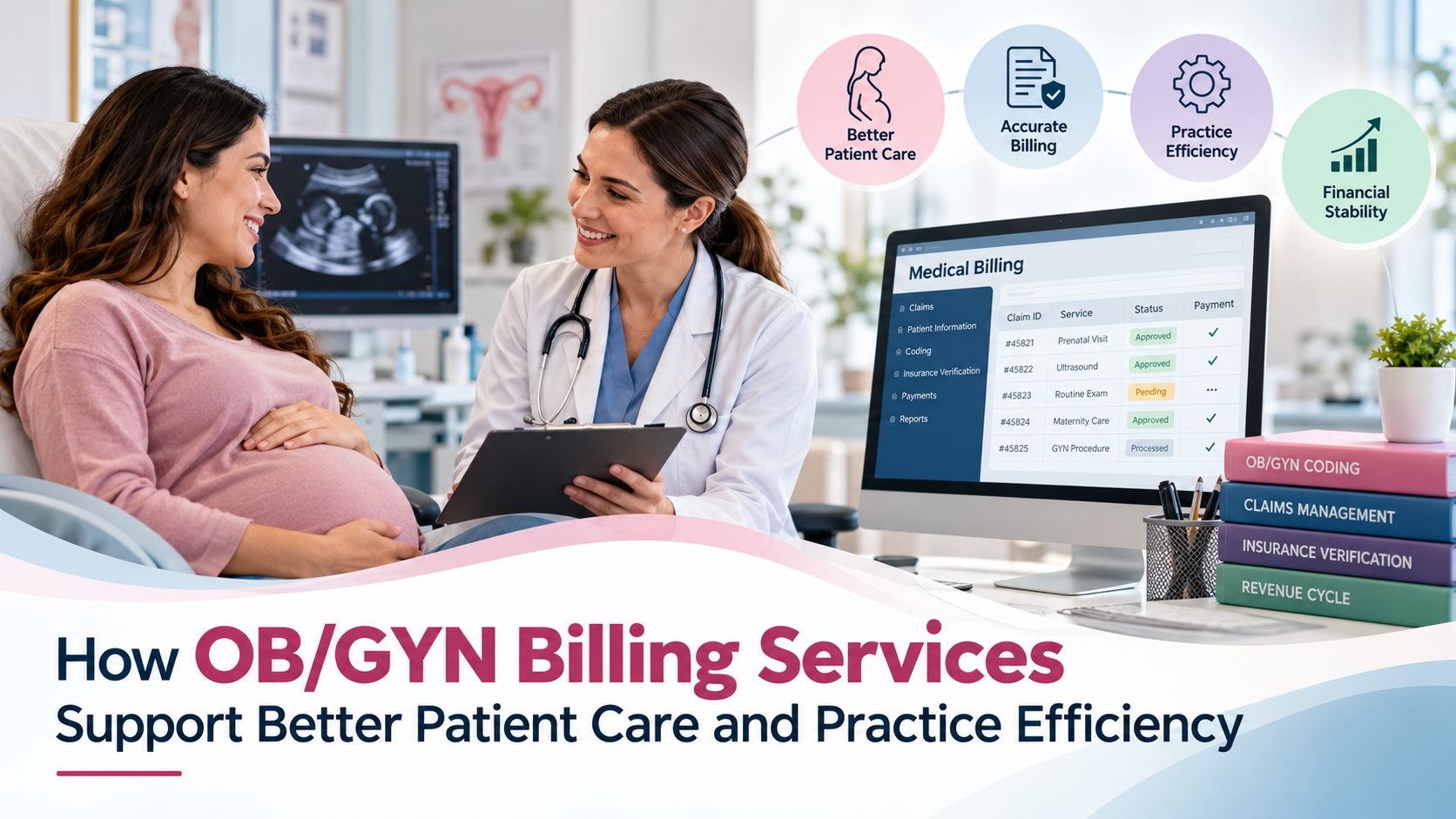

Providing quality women’s healthcare involves more than clinical expertise. OB/GYN practices also need reliable administrative processes to support patients throughout preventive visits, pregnancy, childbirth, and postpartum recovery. When billing problems interrupt these processes, staff may spend valuable time resolving claims instead of assisting patients.
Accurate medical billing helps practices maintain financial stability, manage administrative responsibilities, and provide patients with clearer information about healthcare costs. Although billing takes place largely behind the scenes, its effects can extend to appointment coordination, patient communication, and daily practice operations. Understanding this connection can help healthcare providers identify opportunities to improve both administrative efficiency and the patient experience.
Why Medical Billing Matters in Women’s Healthcare
Obstetrics and gynecology covers a wide range of healthcare needs, from routine screenings and preventive examinations to prenatal care and complex gynecological procedures. Each service may have different documentation, coding, and reimbursement requirements. Unlike a single-visit consultation, maternity care often involves multiple appointments, tests, and procedures over an extended period. This makes accurate recordkeeping particularly important.
Billing errors can result from incomplete documentation, incorrect procedure codes, outdated patient information, or differences in payer requirements. When these problems occur, staff must investigate and correct claims, potentially delaying payment. Medical billing services can help practices manage these challenges by checking claims for errors, tracking outstanding payments, and maintaining accurate billing records.
How Billing Accuracy Influences the Patient Experience
Patients may not see the work involved in preparing and submitting medical claims, but they often encounter its results. Confusing statements, unexpected charges, and unresolved insurance questions can make an already stressful healthcare experience more difficult.
For example, a patient receiving prenatal care may have questions about coverage for laboratory testing, ultrasound examinations, or additional consultations. If financial responsibilities are not explained clearly, the patient may struggle to understand later statements.
Verifying available benefits before scheduled services and explaining known patient responsibilities can help prevent misunderstandings. However, insurance verification does not guarantee payment, and final charges may depend on claim processing.Clear communication allows patients to make more informed financial decisions while keeping discussions about clinical care separate from billing concerns.
Reducing Administrative Pressure on Healthcare Teams
OB/GYN practices handle numerous responsibilities beyond direct medical care. Front-desk employees coordinate appointments, clinical teams document encounters, and billing personnel manage claims and payer correspondence.When these activities are poorly coordinated, even minor errors can create additional work.
A missing diagnosis code, for example, may require the billing team to contact clinical staff for clarification. An unresolved rejection can lead to repeated follow-ups, while inconsistent patient information may delay claim processing.
Effective billing workflows can reduce unnecessary administrative interruptions by establishing clear procedures for:
- Confirming patient and insurance information.
- Checking documentation before claim submission.
- Selecting codes supported by clinical records.
- Monitoring rejected and denied claims.
- Tracking outstanding balances and payment discrepancies.
These measures do not eliminate every billing problem, but they help staff identify issues earlier and resolve them more consistently.
The Importance of Accurate Coding and Clinical Documentation
Reliable billing begins with a clear record of the care delivered.OB/GYN coding requires attention to the specific service, clinical findings, documented procedures, and applicable reporting guidelines. A routine preventive examination, a problem-oriented consultation, and a gynecological procedure may each require different coding considerations.
The American College of Obstetricians and Gynecologists (ACOG) provides specialty-specific coding resources to help clinicians and administrative teams understand these requirements.
Accurate documentation should establish the medical necessity of applicable services and support the codes reported on a claim. If an encounter includes separately reportable services, the documentation must support their reporting under the relevant coding and payer rules.
Billing staff should not assume that every service performed during an appointment can be billed separately. Some services are included within broader procedure or maternity payment arrangements, depending on the applicable rules.
Regular communication between clinicians and billing personnel helps identify documentation gaps without encouraging unnecessary services or unsupported coding.
Supporting Continuity Throughout Maternity Care
Pregnancy involves several stages of care, and patients may receive services from different clinicians or healthcare facilities.A patient might begin prenatal care with one provider, transfer to another practice during pregnancy, and receive delivery or postpartum services at a separate facility. Each transition creates a need for accurate clinical records and clear responsibility for reporting the services performed.Billing coordination becomes especially important when different providers participate in the same maternity care episode.
Practices need to distinguish the services they performed from those provided elsewhere, determine which reporting rules apply, and retain supporting documentation.ACOG has also identified significant changes to obstetric coding beginning January 1, 2027, including a transition away from traditional global maternity codes toward more detailed reporting of maternity services.These developments reinforce the importance of keeping billing procedures current and reviewing payer-specific requirements before submitting claims.
Although administrative accuracy cannot guarantee uninterrupted medical care, it can reduce avoidable billing complications during care transitions.
How Specialized Billing Support Helps OB/GYN Practices
Managing claims internally may be practical for some healthcare organizations. Others may benefit from additional support, especially when employees are handling substantial claim volumes or complex payer requirements.
Specialized OB/GYN billing services can assist practices with claim preparation, coding reviews, denial follow-up, and accounts receivable management.
For example, a billing team may investigate why a submitted claim was rejected, identify missing information, and coordinate corrections before resubmission. It may also examine unpaid balances to determine whether further payer communication or additional documentation is necessary.These activities are administrative rather than clinical, but they can help practices manage their workload more effectively.
When selecting billing support, healthcare providers should consider specialty experience, reporting transparency, communication procedures, data protection practices, and the division of responsibilities between the billing company and clinical staff.
The goal is not simply to process more claims. It is to establish a dependable process that supports accurate payment for properly documented services while allowing healthcare professionals to concentrate on patient needs.
Building a More Patient-Centered Billing Process
Patient-centered healthcare includes respectful communication about financial matters. Billing procedures should therefore be designed with the patient’s experience in mind.Practices can begin by reviewing how they communicate expected charges, respond to billing questions, and explain outstanding balances.
Staff should have a clear process for directing patients to someone who can answer financial questions accurately. Written estimates and coverage explanations should distinguish confirmed information from amounts that remain subject to payer determination.Regular reviews of denied claims and recurring billing inquiries may also reveal problems that deserve attention.
For instance, repeated patient questions about preventive screening charges may indicate that financial explanations need improvement. Similarly, recurring documentation-related denials may suggest the need for clearer internal procedures.Using this information to improve workflows can make billing communication more consistent and reduce unnecessary confusion.
Final Thoughts
Quality women’s healthcare depends on knowledgeable clinicians, coordinated services, and reliable administrative support. Medical billing is one part of this larger system, but its accuracy influences how efficiently practices operate and how clearly patients understand their financial responsibilities.OB/GYN practices that prioritize accurate documentation, timely claim follow-up, and transparent communication are better positioned to manage administrative demands without overlooking the patient experience.By treating billing as an important operational responsibility rather than an isolated financial task, healthcare organizations can create a more organized environment for both patients and medical professionals.
