
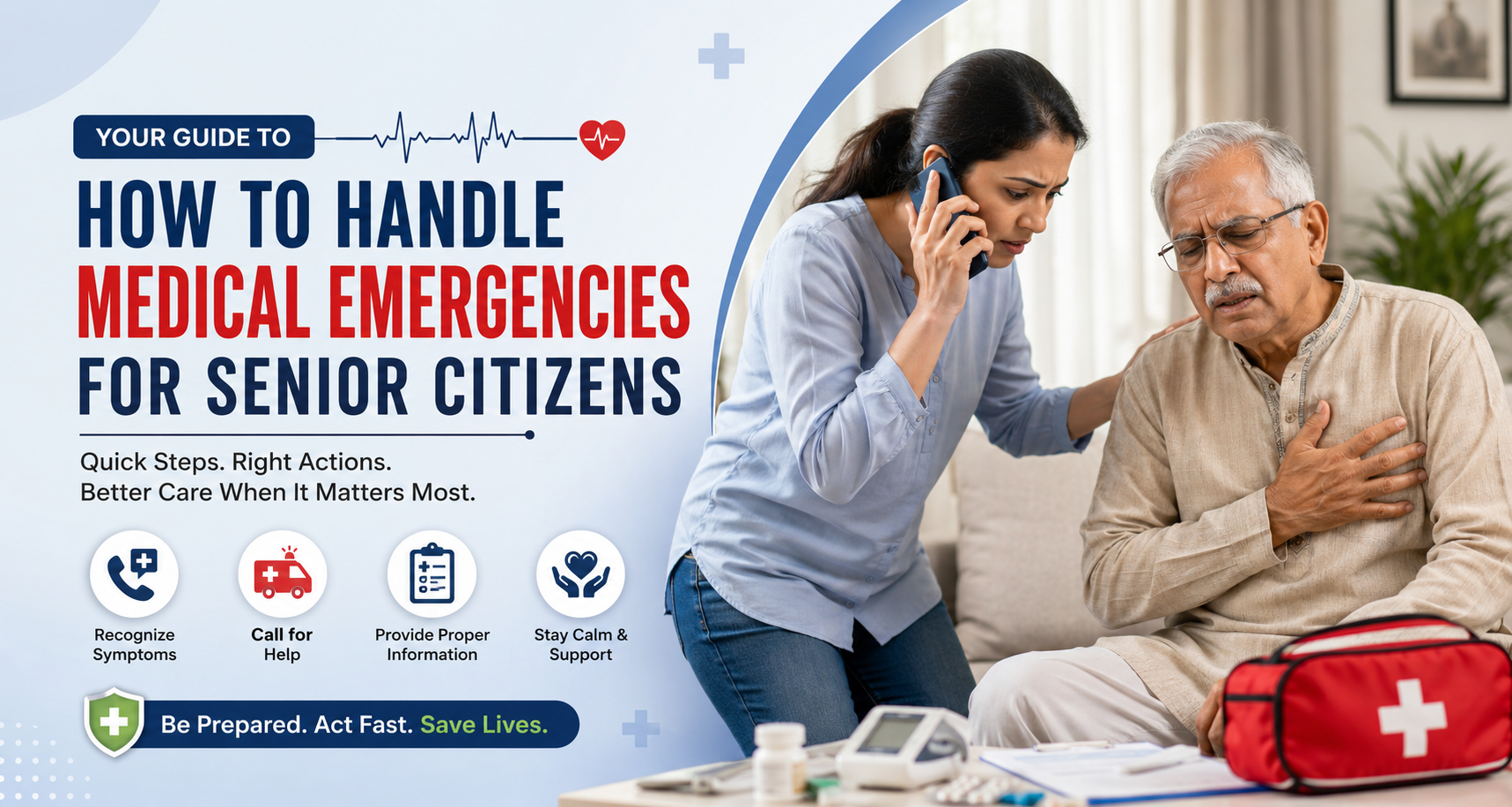

Medical emergencies involving senior citizens can become serious within minutes. Whether it is sudden chest pain, breathing difficulty, a fall, or unconsciousness, families often panic because they are unsure what to do first.
In cities like Delhi and Mumbai, many families live in nuclear setups where elderly parents stay alone during the day. A small delay in responding to an emergency can sometimes make the situation worse. That is why knowing how to react calmly and quickly is extremely important.
A few months ago, one family in Mumbai shared how their elderly father suddenly collapsed at home due to low blood pressure and dehydration. Because they recognised the warning signs early and called emergency medical support immediately, he received treatment on time and recovered well. Situations like these show why emergency awareness matters so much for families with senior citizens.
This guide explains the most common medical emergencies in elderly people, warning signs to watch for, and practical steps families should take during critical situations.
Common Medical Emergencies in Senior Citizens
As people age, the body becomes weaker and more sensitive to health complications. Even a minor issue can quickly become an emergency if ignored.
Heart Attack Symptoms
Heart attacks in senior citizens do not always look dramatic like they do in movies. Sometimes symptoms are mild and confusing.
Common signs include:
- Chest pain or pressure
- Pain spreading to arms, back, or jaw
- Sweating
- Sudden weakness
- Difficulty breathing
- Nausea or dizziness
Many elderly people mistake these symptoms for gas or fatigue, which delays treatment.
Stroke Warning Signs
A stroke requires immediate medical attention. Quick treatment can reduce long-term damage.
Watch for:
- Sudden numbness on one side of the body
- Slurred speech
- Confusion
- Trouble walking
- Loss of balance
- Sudden severe headache
A simple way to identify stroke symptoms is the FAST method:
- F – Face: Is one side drooping?
- A – Arms: Can both arms be raised?
- S – Speech: Is speech unclear?
- T – Time: Call emergency help immediately.
Sudden Breathing Problems
Breathing difficulty can happen because of asthma, heart disease, pneumonia, or low oxygen levels.
Emergency signs include:
- Rapid breathing
- Bluish lips
- Wheezing
- Severe coughing
- Chest tightness
Senior citizens with existing lung or heart conditions are at higher risk.
Falls and Head Injuries
Falls are one of the biggest causes of injury in elderly people.
Even a simple bathroom slip can result in:
- Hip fractures
- Head injuries
- Internal bleeding
- Mobility issues
Families should never ignore falls, especially if the person feels dizzy or loses consciousness afterwards.
Diabetic Emergencies
Low or high blood sugar can quickly become dangerous.
Symptoms may include:
- Sweating
- Shaking
- Confusion
- Sudden weakness
- Blurred vision
- Unconsciousness
Senior citizens with diabetes should always keep medicines and emergency snacks nearby.
Unconsciousness or Sudden Collapse
If an elderly person suddenly becomes unconscious, it may be linked to:
- Cardiac arrest
- Stroke
- Low blood pressure
- Severe dehydration
- Neurological conditions
This situation should always be treated as a medical emergency.
Warning Signs Families Should Never Ignore
Many emergencies give warning signs before becoming critical. Families should pay attention to sudden changes in behaviour or health.
Seek medical help immediately if a senior citizen experiences:
- Chest pain
- Breathing difficulty
- Sudden confusion
- Slurred speech
- Severe weakness
- Fainting
- High fever with weakness
- Sudden loss of balance
- Low oxygen symptoms
Ignoring these symptoms often leads to delayed treatment.
What To Do Immediately During a Medical Emergency
During emergencies, panic is natural. However, staying calm helps families make better decisions.
Stay Calm and Assess the Situation
First, check:
- Is the person conscious?
- Are they breathing normally?
- Can they respond properly?
- Is there visible bleeding or injury?
Avoid crowding the patient or creating panic around them.
Call Emergency Medical Help Immediately
Do not wait too long hoping symptoms will disappear on their own.
Call:
- Ambulance services
- Nearby hospitals
- Family doctor
In metro cities like Delhi and Mumbai, traffic delays can already consume valuable time.
Keep Important Medical Records Ready
Emergency doctors often ask for:
- Previous medical history
- Current medicines
- Blood group
- Test reports
- Existing health conditions
Keeping these documents organised can save crucial time during hospital admission.
Avoid Giving Random Medicines
Many families immediately give painkillers or home remedies without understanding the actual problem.
This can sometimes worsen the condition.
Only give prescribed emergency medicines recommended by the doctor.
Monitor Breathing and Consciousness
Until medical help arrives:
- Keep the patient comfortable
- Check breathing regularly
- Avoid unnecessary movement
- Keep them awake if possible
If breathing stops, CPR may become necessary.
Inform Close Family Members
Medical emergencies can become emotionally overwhelming. Inform close relatives early so responsibilities can be managed properly.
Essential Emergency Numbers Every Family Should Save
Every household with elderly parents should keep important numbers easily accessible.
This includes:
- Ambulance services
- Nearby hospitals
- Family physician
- Emergency relatives
- Home healthcare providers
Many families now keep these numbers saved near refrigerators or on family WhatsApp groups for quick access.
How to Prepare Your Home for Elderly Medical Emergencies
Preparation reduces panic during real emergencies.
Keep Medicines Organised
Use labelled medicine boxes to avoid confusion.
Include:
- Daily medicines
- Emergency medicines
- Prescriptions
- Doctor instructions
Install Safety Support in Bathrooms and Stairs
Bathrooms are one of the most common places where elderly people fall.
Helpful safety additions include:
- Anti-slip mats
- Grab bars
- Proper lighting
- Hand railings
Maintain Emergency Contact Lists
Important numbers should be available to:
- Family members
- Caregivers
- Domestic helpers
This becomes extremely important if senior citizens stay alone at home.
Keep Medical Reports Easily Accessible
Avoid searching for files during emergencies.
Maintain one folder containing:
- Medical reports
- Insurance details
- ID proof
- Prescriptions
Arrange Quick Transportation Support
Sometimes families struggle to arrange transportation during emergencies, especially late at night.
Keeping emergency ambulance contacts ready can help avoid unnecessary delays.
Importance of Quick Ambulance and Patient Transport Services
Many people underestimate how important fast transportation is during medical emergencies.
For conditions like:
- Stroke
- Heart attack
- Severe breathing difficulty
- Unconsciousness
Every minute matters.
Professional ambulance teams also help with:
- Oxygen support
- Patient handling
- Safe transport
- Emergency monitoring
In cities like Delhi and Mumbai, families often rely on emergency medical transport support during critical situations because arranging vehicles at the last minute can become stressful.
Emotional Support for Elderly Patients During Emergencies
Medical emergencies are not only physically difficult but emotionally frightening for elderly patients.
Many senior citizens become anxious when surrounded by panic.
Simple things can help:
- Speak calmly
- Hold their hand
- Reassure them
- Avoid shouting or crying around them
One family in Delhi shared how their elderly mother remained calm during a hospital emergency simply because her children stayed composed and kept talking to her throughout the ambulance ride.
Emotional reassurance genuinely helps patients feel safer.
What Families Should Do if the Situation Becomes Critical
Sometimes, despite treatment, medical conditions may become serious.
During such situations, families should focus on:
- Coordinating with hospital staff
- Understanding medical updates properly
- Keeping documents ready
- Staying emotionally supportive
In difficult circumstances, many families also seek professional funeral service assistance for emergency coordination, ambulance arrangements, and immediate support services to reduce stress during critical moments.
Tips to Reduce Medical Emergencies in Senior Citizens
While not every emergency can be prevented, healthy habits reduce risks significantly.
Regular Health Checkups
Routine health tests help detect problems early.
Proper Diet and Hydration
Senior citizens often ignore hydration, especially during winters.
Balanced nutrition is essential.
Daily Physical Activity
Simple walking and light exercises improve:
- Balance
- Heart health
- Muscle strength
Timely Medicines
Missing medicines can lead to serious complications.
Use reminders or pill organisers.
Monitoring Existing Health Conditions
Conditions like diabetes, blood pressure, and heart disease require regular monitoring.
Ignoring follow-ups increases emergency risks.
Conclusion
Medical emergencies involving senior citizens can happen suddenly and become emotionally overwhelming for families. However, quick action, awareness, and proper preparation can make a major difference.
Families should understand common warning signs, keep emergency contacts ready, and avoid delays in seeking medical help. More importantly, elderly patients need calm, compassionate support during difficult moments.
Being prepared does not remove the fear of emergencies, but it helps families respond with confidence when every minute matters.

